

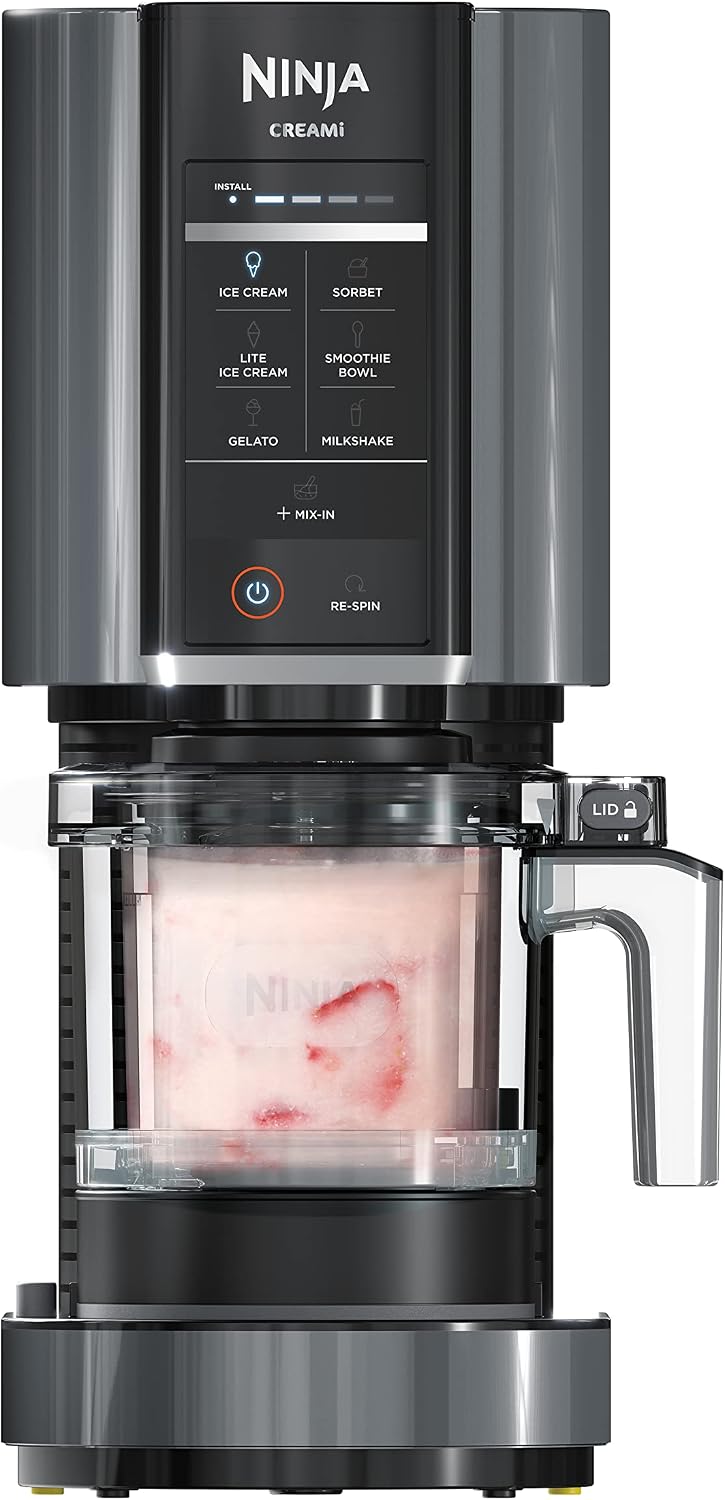
Ninja CREAMi 7-in-1 Ice Cream Maker Review: Homemade Ice Cream, Gelato and Sorbet From a Frozen Pint
Few kitchen gadgets have had as much attention in recent years as the Ninja CREAMi. The idea is simple. You freeze your own base in a pint for 24 hours, lock it into the machine, press one button, and a few minutes later you have ice cream, gelato, sorbet, a milkshake, or a smoothie bowl. This review covers the Ninja CREAMi 7-in-1 Ice Cream Maker (NC299 series): how it works, what food science says about homemade ice cream texture, the downsides buyers actually report, and who is likely to enjoy it. You can check the current price on Amazon.
The Short Version
Best for: people who like to control what goes into their dessert (protein, lower sugar, dairy-free, vegan), enjoy experimenting with recipes, and can plan a day ahead.
Not ideal for: spontaneous cravings, large batches, quiet kitchens, or anyone who wants a machine that works perfectly with zero tweaking.
Specs at a Glance
| Feature | Details |
|---|---|
| Programs | 7: Ice Cream, Lite Ice Cream, Gelato, Sorbet, Milkshake, Smoothie Bowl, Mix-In (plus a Re-Spin button) |
| Pint size | 16 oz |
| Motor | 800W, 120V / 60Hz |
| Prep time | Freeze the base for 24 hours before processing |
| Processing time | A few minutes per pint |
| Dishwasher safe | Pint containers, storage lids, and Creamerizer Paddle (top rack) |
| Pint compatibility | NC299 and NC300 series pints only |
| In the box | Motor base, one 16 oz pint with storage lid, Creamerizer Paddle, outer bowl with lid, recipe guide |

From Frozen Pint to Soft Ice Cream in Three Steps
- Prep your base. Mix your ingredients in the pint. This could be a cream or milk base for ice cream, blended fruit for sorbet, or a smoothie mixture.
- Freeze it for 24 hours. Ideally on a level shelf so the top freezes flat.
- Lock it in and press a program. The machine does the rest. If the texture is not quite right, press Re-Spin for a softer result, or choose Mix-In to blend in chocolate chips, nuts, cookies, fruit, or candy.
Ninja says its Creamify technology finely shaves through a uniformly frozen pint, turning a hard block into a smooth frozen dessert. In our photo, the control panel shows an Install indicator, a lid lock, and the full list of programs, so it is clear when the pint is correctly seated.
Why Homemade Ice Cream Turns Out Icy
Texture is the whole game with frozen desserts, and the science explains why.
An article from the Royal Society of Chemistry describes ice cream as a mix of three states of matter. By volume it is about 30% ice crystals, 50% air bubbles, 5% fat droplets, and 15% sugar solution. The same article notes that if ice crystals get too large, ice cream turns gritty, while small crystals and small air bubbles give a smooth, soft texture.
That is the core challenge of any home freezer. As a general rule of food science, a liquid that freezes slowly without stirring forms larger crystals. Traditional ice cream makers fight this by churning the base while it freezes. The CREAMi takes the opposite approach: freeze first, then process. We did not find independent measurements of crystal size for this machine, so "creamy" remains the manufacturer's claim that your own recipe and freezer will confirm or not.
Sugar and fat also matter. Sugar does more than sweeten: it lowers the freezing point of the mixture, so some water stays liquid at freezer temperatures and keeps the dessert scoopable. Fat adds body. This is general food science rather than something specific to the CREAMi, but it explains why low-sugar and low-fat bases are the hardest to get right, and why recipes for them often add xanthan gum, guar gum, or pudding mix.
The Seven Programs, Explained
- Ice Cream: The classic setting for a standard cream or milk base.
- Lite Ice Cream: Meant for lower-sugar or lower-fat bases. One review notes that using the regular Ice Cream program on these bases can strain the machine.
- Gelato: For denser, richer-style desserts.
- Sorbet: For fruit-based, dairy-free treats.
- Milkshake: Turns a frozen base into a thick, drinkable shake.
- Smoothie Bowl: Gives a thick, spoonable result.
- Mix-In: Distributes add-ins evenly after the pint has been processed.
- Re-Spin: Runs the pint a second time for a softer, creamier texture.

Ninja describes each program as a different combination of speed, pressure, and time.
Your Recipes, Your Rules
The listing highlights protein-packed ice cream, low-sugar sorbet, dairy-free treats, and vegan options made from scratch with no preservatives or fillers. That is a real advantage: you choose every ingredient.
A few honest points to keep in mind:
- Homemade is not automatically healthy. What you put in decides the nutrition. A pint of full-fat ice cream is still a treat.
- Specialty recipes take practice. Protein and low-sugar bases freeze harder and can come out crumbly. Many recipes use gums or pudding mix to fix this, and beginners do better starting with the included recipes.
- Fruit-based recipes are the easiest wins. Sorbet needs little more than ripe fruit and a bit of liquid.
Food Safety for Homemade Bases
If you make custard-style ice cream or gelato with eggs, food safety matters. The FDA advises against using raw eggs because of Salmonella risk, which is more serious for infants, older adults, pregnant women, and people with weakened immune systems. Its recommendations include:
- Use pasteurized eggs, egg substitutes, or pasteurized shell eggs.
- Cook the egg base to 160°F, then cool it.
- Use pasteurized milk and cream.
- Or choose an egg-free recipe.
In the Box and Pint Compatibility
You get the motor base, one 16 oz pint with a storage lid, the Creamerizer Paddle, an outer bowl with a lid, and a recipe guide. Extra pints are sold separately, and you will probably want a few if you like to keep several flavors ready in the freezer.
Check this before buying extra pints. The listing states that this unit works only with NC299 and NC300 series pints. It is not compatible with NC100, NC200, NC500, or NC700 series pints. If you are not sure, look for the SKU number on the bottom of the machine.
Where It Falls Short
No product is perfect, and the complaints about the CREAMi are consistent enough to take seriously:
- You must plan ahead. The base needs 24 hours in the freezer. Reviewers say a frozen base can last for several weeks, which helps if you prep a few pints at once.
- It is loud. TechRadar's testing, as reported by Tasting Table, measured about 88.4 decibels, louder than an average vacuum cleaner. Cycles are short, but you will hear it.
- The pint is small. At 16 oz, one pint is a small batch.
- First spins can be crumbly. Re-Spin usually fixes it, but it adds a step.
- The frozen hump matters. Frozen bases often form a raised hump on top. Tasting Table says it should be flattened before spinning, because leaving it can damage the machine.
- Some buyers report plastic shavings or broken parts. These reports include overfilled pints, off-brand accessories, and worn paddles. They seem to affect a minority of users, but they are worth knowing about.
- It is not cheap. The 7-in-1 has generally sold for over $200, while traditional ice cream makers can cost about half that. Prices change, so check the current listing.
- It takes space. It is a heavy countertop appliance, and reviewers cite weights of roughly 13 to 15 pounds depending on the model, so check the listing. Pints also use freezer room.
CREAMi vs a Traditional Ice Cream Maker
- Prep time: The CREAMi needs a 24-hour freeze per pint. Freezer-bowl machines such as the Cuisinart ICE-21 need the bowl frozen for at least 8 hours, and compressor machines such as the Whynter ICM-220SSY make ice cream in 25 to 40 minutes with no pre-freezing, according to Tasting Table.
- Batch size: The CREAMi makes one pint at a time. Many traditional machines make larger batches.
- Flavor flexibility: Each pint is its own flavor, so you can freeze several different ones and spin whichever you want.
- Versatility: Sorbet, shakes, smoothie bowls, and mix-ins are built in.
- Price: Traditional machines often cost less. Tasting Table compared a Cuisinart at $99.94 with a single-pint CREAMi at $219.99 at the time of writing.
- Soft serve: This model does not have a soft serve mode. That belongs to Ninja's Scoop & Swirl line.
Fixing Crumbly, Powdery or Icy Pints
If your first spin comes out like sand or granita, try these steps:
- Let the pint sit at room temperature for 10 to 20 minutes, then spin again. This is a commonly shared tip, and Ninja's own FAQ reportedly blames ingredients that are too cold.
- Add 1 to 2 tablespoons of liquid (milk, non-dairy milk, or water) and press Re-Spin.
- Do not re-spin endlessly. Tasting Table notes that re-spinning more than once can make a pint icy, so add liquid sparingly.
- Check your freezer. Around 0°F (-18°C) is the standard home freezer setting. A colder freezer makes pints harder.
- Review the recipe. Too little fat or liquid tends to give a crumbly, granita-like result. Too much water tends to give an icy one.
- Flatten the hump before every spin.
Keeping It Clean
The pint containers, storage lids, and Creamerizer Paddle are top-rack dishwasher safe, which makes cleanup quick. A few extra habits help:
- Remove the rubber ring from the lid before washing, since it can trap residue.
- Do not fill pints past the max fill line.
- Use genuine pints and parts that match your machine series.
- Follow the manual for handling the blade assembly.
What We Like and What We Don't
What we like:
- Seven one-touch programs cover ice cream, gelato, sorbet, shakes, and smoothie bowls.
- You control sugar, dairy, protein, and additives.
- Fast processing after the freeze.
- Mix-In and Re-Spin make it easy to fine-tune texture.
- Dishwasher-safe pint, lid, and paddle.
- Great for small households and trying new flavors.
- Individual pints let you keep several flavors on hand.
What we don't:
- 24-hour freeze means no instant gratification.
- Loud during operation.
- Only one 16 oz pint in the box.
- Pints are only compatible with NC299 and NC300 series.
- Crumbly results are common until you learn your recipes.
- Costs more than many traditional ice cream makers.
- Some reports of durability issues.
Right for You? A Quick Checklist
Likely a yes if you:
- Love experimenting with flavors and ingredients.
- Follow a high-protein, lower-sugar, dairy-free, or vegan diet and struggle to find matching ice cream.
- Cook for one to three people.
- Have freezer space and don't mind planning a day ahead.
Maybe not if you:
- Want ice cream on demand with no preparation.
- Regularly serve large groups.
- Are sensitive to noise.
- Prefer a lower-cost machine with bigger batches.
Questions Shoppers Ask Before Buying
How long does it take to make ice cream? About 24 hours of freezing, then a few minutes of processing.
Is it very loud? Yes. One test measured 88.4 decibels, though cycles are short.
Can I make vegan or dairy-free desserts? Yes. The listing mentions vegan and dairy-free options, and sorbets are naturally dairy-free if made from fruit.
Can I use my old pints from another CREAMi? Only if they are from the NC299 or NC300 series. NC100, NC200, NC500, and NC700 series pints are not compatible.
Is it dishwasher safe? The pint containers, storage lids, and Creamerizer Paddle are top-rack dishwasher safe.
How much does one pint make? A single 16 oz pint is a small batch, roughly one to two generous servings.
Does it make soft serve? No. This model focuses on scoopable desserts, shakes, and smoothie bowls.
The Bottom Line
The Ninja CREAMi 7-in-1 is a fun, flexible machine for people who want to make their own frozen desserts and are happy to plan ahead. Its strengths are control over ingredients and variety, from sorbet to protein ice cream. Its weaknesses are noise, the 24-hour freeze, a small pint, a learning curve with some recipes, and a higher price than many traditional makers. If you like to experiment and want full control of what goes in your bowl, it is a strong pick. If you want effortless ice cream in a hurry, a different style of machine may suit you better. Prices change often, so check the latest deal on Amazon before you buy.
This article is for general information. If you are preparing desserts for someone who is pregnant, elderly, very young, or has a weakened immune system, follow local food safety guidance, especially for recipes with eggs.
References
- Royal Society of Chemistry, An understanding of the physical chemistry of ice cream.
- U.S. Food and Drug Administration, Enjoying homemade ice cream without the risk of Salmonella infection.
- Tasting Table, 10 common complaints customers have about Ninja CREAMi.
- Tasting Table, 5 disadvantages of using a Ninja CREAMi.
- Healthy Slow Cooking, Why is my Ninja CREAMi ice cream crumbly or powdery.